Safety Operation Procedures and Accident Prevention Measures for Lab Companion High Temperature Ovens
High temperature ovens are widely used in industrial drying, curing, high-temperature aging and other working conditions. With high operating temperature and heavy running load, they are prone to cause burns, fires, explosions, electrical short circuits and other safety accidents. To ensure personnel and equipment safety and standardize operation procedures, these safety operation procedures and accident prevention measures are formulated in accordance with industrial oven application standards.
1. Safety Operation Procedures for High Temperature Ovens
1.1 Pre-Start Safety Inspection
1.1.1 Environment Inspection
Keep the operation area ventilated, dry and tidy. No flammable and explosive materials, corrosive liquids, cartons, debris or other items are allowed within 1.5 meters around the oven. The ground shall be flat and stable, and sufficient space shall be reserved for equipment heat dissipation.
1.1.2 Equipment Status Inspection
Check that the door sealing gasket is intact without damage, and the inner chamber, air duct and heating elements are free of oil, debris and water. Confirm that the temperature sensor, over-temperature protector, fan and emergency stop switch function properly. For explosion-proof ovens, inspect that the gas monitoring, exhaust and pressure relief devices are intact.
1.1.3 Sample Compliance Inspection
It is strictly prohibited to place flammable, explosive, volatile, strong oxidizing or highly corrosive items. Sealed containers and pressurized components shall not be baked directly. Dangerous goods such as lithium batteries and chemical raw materials must be processed in dedicated explosion-proof ovens.
Samples shall be placed evenly without blocking air ducts or touching heating elements, and the loading capacity shall not exceed 1/3 of the effective inner chamber volume.
1.1.4 Power, Water and Parameter Inspection
Confirm that the supply voltage is consistent with the equipment nameplate and the grounding is firm and reliable. For water-cooled models, check that the cooling water flow and quality are normal.
Verify the set temperature, time and program. Operation beyond the rated temperature range of the equipment is strictly prohibited.
1.2 Standard Operation During Operation
• After placing samples, close and lock the chamber door tightly to ensure good sealing.
• Start the equipment according to procedures, and observe whether the temperature rise, fan operation and instrument display are normal, with no abnormal noise, odor or smoke.
• Assign dedicated personnel on duty during equipment operation. Check temperature and alarm information regularly; do not leave the post without permission or sleep on duty.
• Frequent door opening, modification of system protection parameters, and touching of high-temperature inner chamber, sample racks and heating components are strictly prohibited during operation.
• For live or liquid-containing samples, strictly control the load power and standardize wiring to prevent short circuits and liquid leakage.
• In case of over-temperature, alarm or fault prompt, immediately press the emergency stop switch, cut off the main power supply, and restart only after troubleshooting.
1.3 Shutdown and Final Operations
• After testing, stop heating first and keep the fan running to allow the internal temperature to naturally drop below 60°C before opening the door.
• Open the door slowly sideways to release residual heat first. Wear high-temperature resistant insulated gloves when handling samples to prevent scalding.
• Clean up residual debris and water in the inner chamber in a timely manner, wipe the inner chamber with soft cotton cloth, and keep the cabinet dry and clean.
• Turn off the main power and water supply. Drain water from pipelines for water-cooled models. Tidy up tools and samples, and restore the operation area to order.
• Fill in the equipment operation log truthfully, recording running time, temperature parameters, sample information and abnormal conditions.
1.4 Basic Requirements for Operators
• Operators must be professionally trained and qualified before taking post, and be familiar with equipment structure, operation procedures and emergency response methods.
• Wear insulated gloves, goggles and other protective equipment as required during operation. Do not wear loose clothing; tie long hair up to avoid entanglement with equipment.
• Unauthorized personnel are prohibited from approaching or touching the equipment. Warning signs shall be set in the operation area.
2. Prevention Measures for Typical Accidents
2.1 Fire Accident Prevention
• Baking of gasoline, alcohol, thinners, diluents and other flammable and explosive volatile substances is strictly prohibited. If necessary, use explosion-proof ovens with forced exhaust enabled.
• Regularly clean dust, oil and plastic residues in heating tubes, air ducts and fans to prevent heat accumulation and spontaneous combustion.
• Calibrate the independent over-temperature protection device quarterly to ensure automatic power cutoff of heating supply when temperature exceeds the limit.
• Equip dry powder fire extinguishers near the equipment. Water or foam fire extinguishers are prohibited for electrical and high-temperature fires.
• Avoid prolonged high-temperature operation without load to prevent overheating and burnout of heating elements.
2.2 High-Temperature Scald Prevention
• Post obvious "High Temperature Hazard" warning signs on the equipment. Touching the cabinet, door or inner chamber during operation is prohibited.
• Open the door sideways at high temperature: slightly open first for heat dissipation, then fully open.
• Use special high-temperature resistant gloves and clamps for sample handling; bare-handed operation is forbidden.
• Set up a warning area for equipment just shut down to prevent accidental contact and scalding by unauthorized personnel.
2.3 Explosion and Splash Accident Prevention
• Sealed glass bottles, canned liquids and pressurized components are strictly prohibited from direct baking. Open placement and reserved pressure relief space are required.
• For flammable and explosive samples such as batteries, cells and chemical powders, explosion-proof high-temperature ovens must be used, equipped with hydrogen/carbon monoxide monitoring, independent pressure relief and emergency exhaust functions.
• Vacuum ovens shall strictly follow the procedure: "vacuum first, then heat up; cool down first, then break vacuum" to prevent burst caused by excessive internal and external pressure difference.
• Place liquid samples in trays to avoid tilting and leakage, preventing high-temperature splashing injuries.
2.4 Electrical Safety Accident Prevention
• The equipment must be reliably grounded. Regularly inspect the insulation of power cords and terminals to prevent electric leakage and short circuits caused by aging or damage.
• Supply power according to rated power strictly. Unauthorized wiring and overloaded operation are prohibited to avoid tripping or fire.
• Keep the operating environment dry. Do not operate with wet hands or rinse the electric control cabinet with water.
• Keep the emergency stop switch unobstructed. Cut off power immediately in case of electrical abnormality; live maintenance is prohibited.
2.5 Equipment Failure and Damage Prevention
• Establish a hierarchical maintenance system: clean air ducts and filters monthly, calibrate temperature, humidity and safety devices quarterly, and conduct comprehensive inspection of heating, fan and control systems annually.
• Operation over temperature, overload or over weight is strictly prohibited. Forcible modification or disassembly of core components is not allowed.
• Replace worn parts such as sealing gaskets, sensors and heaters with original accessories in a timely manner.
• For long-term shutdown, run without load monthly to maintain component activity and prevent moisture damage.
2.6 Emergency Response Measures
• Over-temperature / Alarm: Immediately press emergency stop, cut off power, close the chamber door, and troubleshoot after cooling.
• Fire Danger: Cut off power immediately, extinguish with dry powder fire extinguisher. Do not open the door to supply oxygen. Alarm promptly if the fire spreads.
• Scald Accident: Rinse the burned area with running clean water immediately. Seek medical treatment in case of severe injury.
• Explosion / Leakage: Evacuate personnel quickly, cut off power and air supply, enhance ventilation, and allow professionals to handle the scene.
• Electric Leakage / Shock: Turn off the main switch immediately. Do not touch the injured person or equipment with bare hands. Administer first aid and contact a professional electrician.
3. Daily Management Requirements
• Organize regular safety training and emergency drills to improve operators’ risk prevention and emergency response capabilities.
• Implement dedicated personnel management, regular calibration and maintenance records for equipment to ensure safety devices remain effective at all times.
• Develop special safety plans separately for non-standard working conditions and dangerous goods baking; illegal operations are strictly prohibited.
• Contact the official after-sales service of Lab Companion promptly for complex equipment failures. Unauthorized disassembly by non-professionals is prohibited.
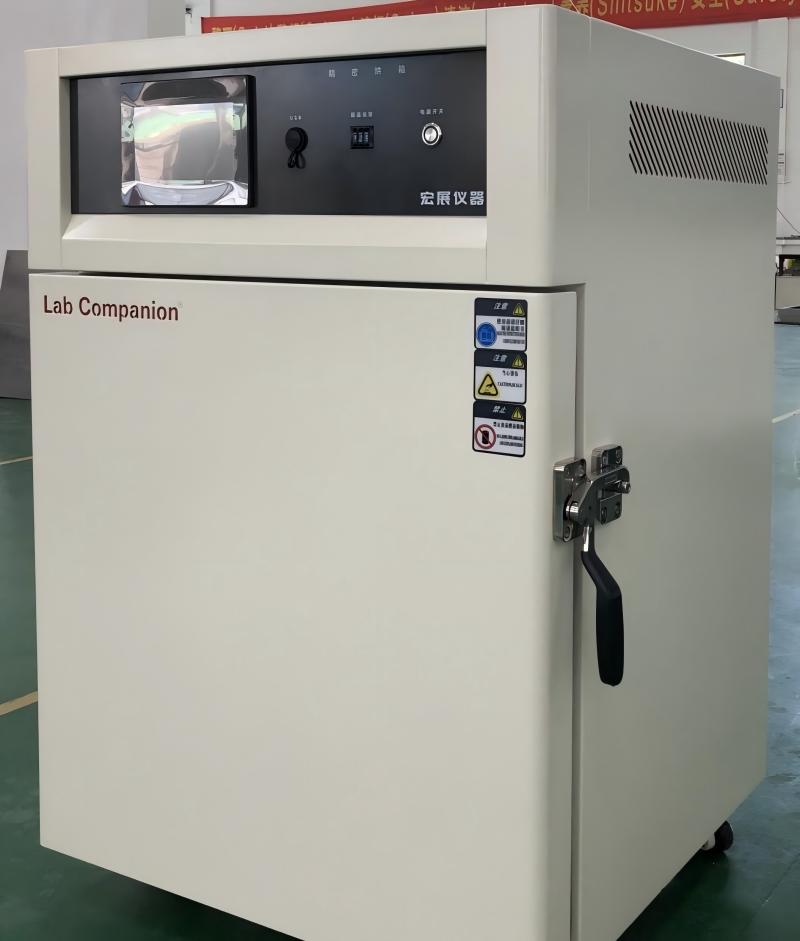
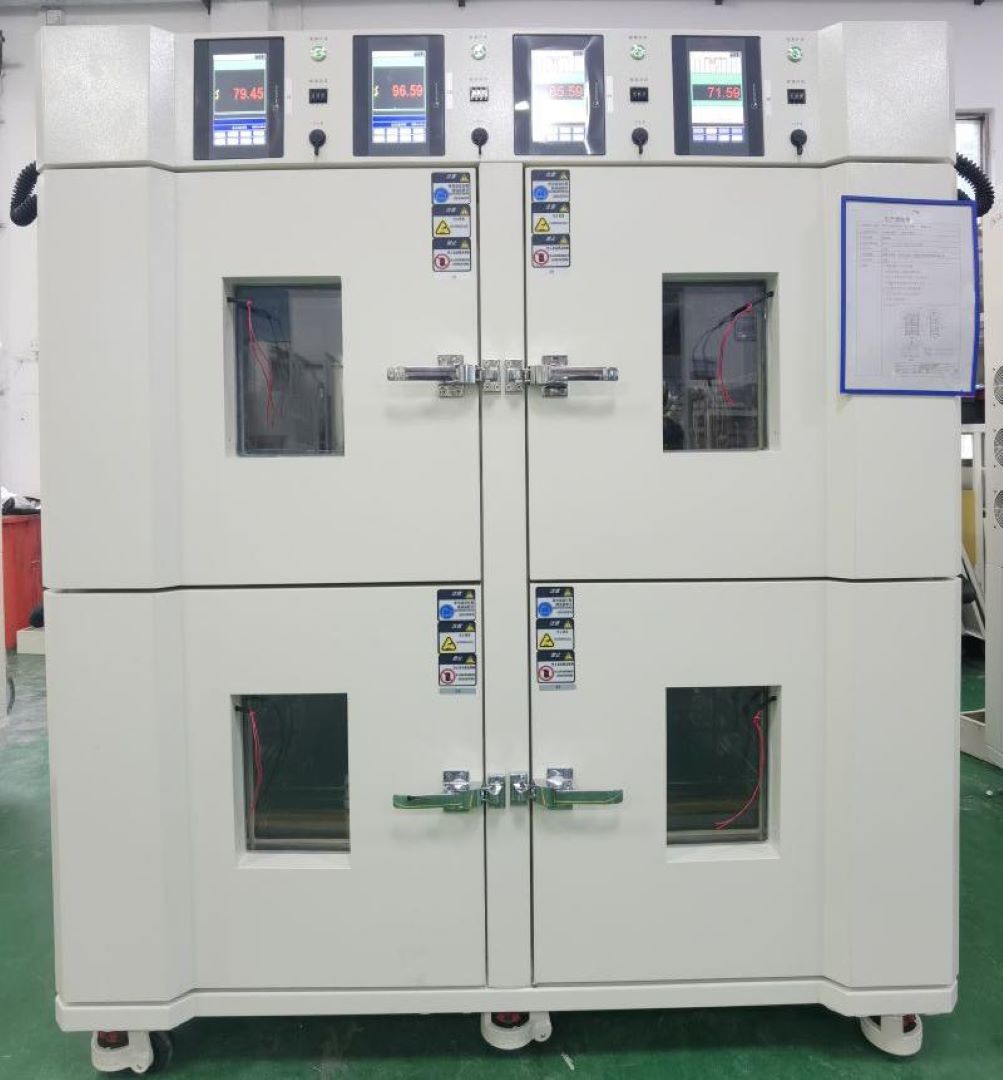
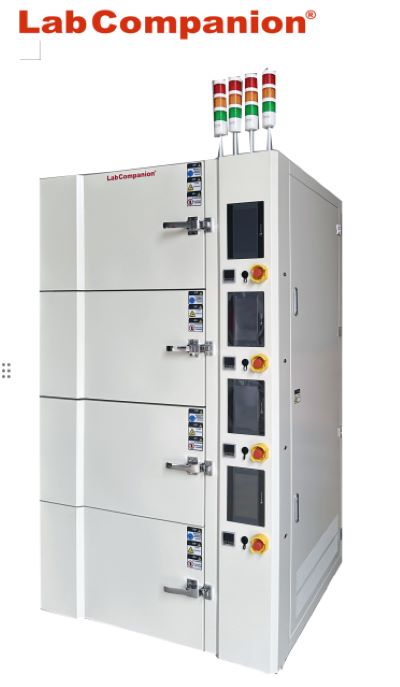
In industrial processes like electronic component aging, new material curing and precision part drying, equipment temperature control, space utilization and stability directly impact product quality and efficiency. The 86L three-layer compound precision oven, with optimized structure and core technology upgrades, is an ideal choice for balancing mass production and refined processes. This article analyzes its key industrial advantages from core performance perspectives.
I. ±0.5℃ High-Precision Temperature Control, Laying a Solid Foundation for Process Stability
Precision industrial processing has extremely low tolerance for temperature fluctuations; minor deviations may cause product performance degradation or batch scrapping. Equipped with a high-precision PT100 temperature sensor and intelligent PID self-tuning control system, this oven achieves ±0.5℃ precise temperature control from room temperature to 300℃, reducing temperature fluctuation by over 40% compared to traditional equipment. Combined with multi-zone independent heating and optimized air duct design, internal temperature uniformity is controlled within ±1℃, ensuring consistent heating of multi-layer materials and improving yield of processes such as electronic component aging testing and composite curing.
II. Three-Layer Compound Structure + 86L Capacity, Balancing Efficiency and Flexibility
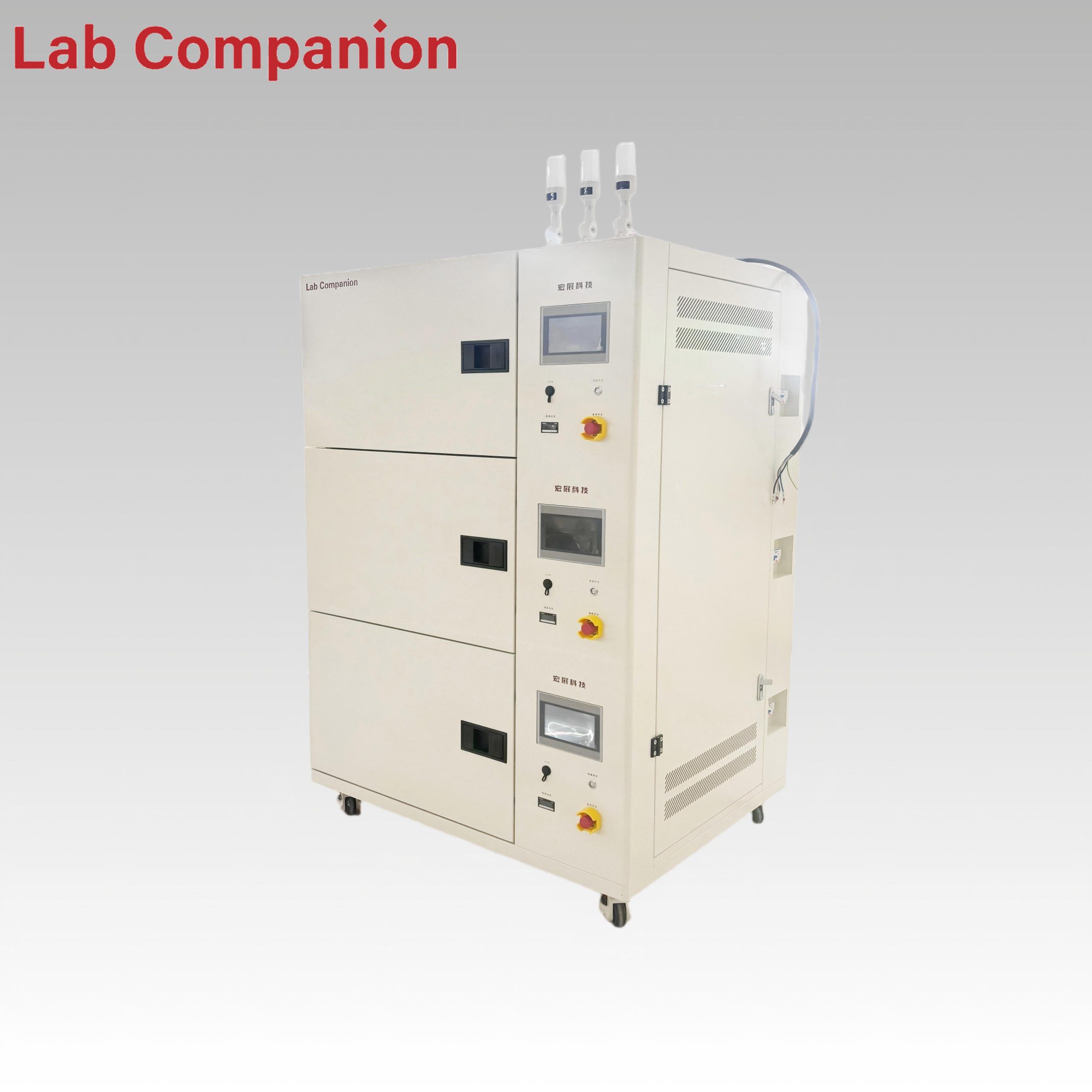
To meet industrial needs of multi-batch, small-batch or same-batch multi-specification processing, the equipment adopts a three-layer independent cavity design. The 86L capacity enables one-time multi-material partition processing. Each cavity supports independent parameter setting (temperature, holding time, etc.), allowing simultaneous same-process batch production or different material drying/curing, greatly improving equipment utilization and reducing multi-category production costs. Detachable shelves enhance space adaptability, fitting processing needs of PCB boards, electronic components, small auto parts and other materials.
III. Efficient Energy-Saving Design, Reducing Long-Term Operating Costs
Long-term energy consumption is a key concern for enterprises. This oven adopts a double-layer stainless steel structure filled with high-density ceramic fiber insulation (thermal conductivity <0.035W/(m·K)) and a sealed door, reducing heat loss and improving insulation by 30% vs. traditional equipment. The intelligent temperature control system dynamically adjusts heating power to avoid ineffective energy use. Equipped with a high-efficiency centrifugal fan for forced hot air circulation, the heating rate reaches 5-10℃/min, shortening preheating time, improving thermal efficiency and significantly reducing long-term electricity costs.
IV. Comprehensive Safety Protection, Ensuring Production Continuity
Safety is critical in industrial production. The equipment has multiple protection mechanisms: over-temperature alarm (auto power-off when exceeding set value by 10-20℃), leakage protection (grounding resistance ≤4Ω), and furnace door safety interlock (immediate heating stop when opened to prevent scalds). It also features motor overload protection and power-off memory (auto recovery of parameters after restart, avoiding material loss from process interruption). High-quality stainless steel inner tank and high-temperature resistant heating tubes ensure stable long-term high-temperature operation (heating element service life >30,000 hours), reducing maintenance and downtime.
V. Intelligent Control, Adapting to Industry 4.0 Production Needs
Equipped with a PLC control system and touch screen interface, the equipment supports storage of over 10 program groups. It can preset complex temperature curves for automatic multi-stage heating and heat preservation, reducing manual errors. Optional RS485/USB interfaces enable real-time temperature data export and remote monitoring, facilitating process tracing and optimization. Simple operation logic reduces training costs, allowing quick mastery by non-professionals and meeting large-scale standardized production requirements.
In summary, with core advantages of precise temperature control, efficient space utilization, energy saving and safety, the 86L three-layer compound precision oven perfectly fits precision processing needs of electronics, automotive and new material industries. Its design balancing production efficiency and process flexibility meets current enterprise needs and adapts to future capacity expansion and product upgrading, serving as a cost-effective solution in industrial precision heating.
Polypropylene (PP) itself is a highly flammable hydrocarbon with a limiting oxygen index (LOI) of only 17.8%. It will continue to burn even after being removed from the fire source. The core principle of flame-retardant PP is to interrupt or delay its combustion cycle through physical and chemical means. Combustion requires the simultaneous existence of three elements: combustible material, heat and oxygen. The function of flame retardants is to destroy this "burning triangle".
In industry, flame retardancy is mainly achieved by adding flame retardants to PP. Different types of flame retardants function through the following mechanisms:
1. Gas-phase flame retardant mechanism
This is one of the most common mechanisms, especially applicable to traditional halogen-based flame retardants. When flame retardants are heated and decomposed, they can capture the free radicals (such as H· and HO·) that maintain the combustion chain reaction in the combustion reaction zone (flame), causing their concentrations to drop sharply and thus interrupting the combustion.
2. Condensed phase flame retardant mechanism
This is the most mainstream mechanism of halogen-free flame-retardant PP. Flame retardants promote the formation of a uniform and dense carbon layer on the surface of polymers. This layer of carbon has three major functions. The first step is to prevent external heat from entering the interior of the polymer. Secondly, it prevents the escape of flammable gases inside and the entry of external oxygen. Finally, it inhibits the further pyrolysis of the polymer and the generation of smoke.
When a fire occurs, the acid source promotes the dehydration, cross-linking and carbonization of the carbon source. Meanwhile, the large amount of gas produced by the decomposition of the gas source causes the softened carbon layer to expand, eventually forming a porous, dense and strong foam carbon layer, which protects the underlying PP like "armor".
3. Cooling/heat absorption mechanism
Flame retardants absorb a large amount of heat during the decomposition process, reducing the surface temperature of polymers and making it difficult for them to continuously pyrolyze and produce flammable gases. Typical representatives include aluminium hydroxide (ATH) and magnesium hydroxide (MH). When they decompose, they absorb a large amount of heat (endothermic reaction) and release water vapor. The water vapor can not only dilute flammable gases but also play a cooling role.
4. Dilution mechanism
Flame retardants decompose to produce a large amount of non-flammable gases (such as water vapor and CO₂, etc.), which can dilute the concentration of flammable gases and oxygen near the polymer surface, making combustion unsustainable. Both the gas sources of metal hydroxides and intumescent flame retardants have this function.
In conclusion, the working principle of flame-retardant PP in industry is a complex process involving the synergy of multiple mechanisms. Modern flame-retardant PP technology is developing towards halogen-free, low smoke, low toxicity and high efficiency. Among them, the condensed phase flame-retardant mechanism represented by intumescent flame retardants (IFR) is the core of current research and application. By carefully designing flame-retardant formulas, the best balance can be achieved among flame-retardant efficiency, material mechanical properties, processing performance and cost.
自然対流試験室、恒温恒湿試験室、高温オーブンの比較説明書:ホームエンターテイメントのオーディオビジュアル機器や自動車用電子機器は、多くのメーカーの主要製品の一つであり、開発プロセスでは、製品の温度に対する適応性とさまざまな温度での電子特性をシミュレートする必要があります。しかし、一般的なオーブンや温湿度チャンバーを使用して温度環境をシミュレートする場合、オーブンまたは温湿度チャンバーには循環ファンを備えたテストエリアがあるため、テストエリアで風速の問題が発生します。試験中、循環ファンを回転させることにより、温度均一性のバランスが保たれます。試験エリアの温度均一性は風の循環により達成できますが、試験対象製品の熱も循環空気によって奪われるため、無風使用環境(リビングルーム、屋内など)での実際の製品とは大きく異なります。風の循環の関係で、試験対象製品の温度差は10℃近くになります。実際の使用環境をシミュレートするため、多くの人が温度を生成できる試験室(オーブン、恒温恒湿室など)だけが自然対流試験を行えると誤解しています。実はそうではありません。仕様では風速に特別な要件があり、風速のない試験環境が必要です。自然対流試験装置とソフトウェアを通じて、ファンを通さない温度環境(自然対流)を生成し、試験対象製品の温度検出のための試験統合試験を行います。このソリューションは、家庭用電子機器や限られたスペースでの実際の周囲温度試験(大型液晶テレビ、自動車のコックピット、自動車用電子機器、ノートパソコン、デスクトップ、ゲーム機、ステレオなど)に使用できます。強制空気循環試験規格:IEC-68-2-2、GB2423.2、GB2423.2-89 3.31 風循環の有無による試験環境と試験対象製品の試験の違い:説明書:試験対象製品に通電されていない場合、試験対象製品自体は発熱せず、その熱源は試験炉内の空気熱を吸収するだけです。試験対象製品に通電して加熱すると、試験炉内の風循環が試験対象製品の熱を奪います。風速が1メートル増加するごとに、その熱は約10%減少します。エアコンのない屋内環境で電子製品の温度特性をシミュレートするとします。オーブンまたは恒温加湿器を使用して35℃をシミュレートする場合、電気加熱とコンプレッサーにより環境を35℃以内に制御できますが、オーブンと温湿試験チャンバーの風循環が試験対象製品の熱を奪います。そのため、試験対象製品の実際の温度は、実際の無風状態での温度よりも低くなります。実際の無風環境(屋内、無始動車のコックピット、計器シャーシ、屋外の防水チャンバーなど)を効果的にシミュレートするには、風速のない自然対流試験チャンバーを使用する必要があります。試験対象風速とIC製品の比較表:説明: 周囲の風速が速い場合、風のサイクルにより IC 表面温度も IC 表面の熱を奪い、結果として風速が速くなり、温度が低くなります。




 見積もりを依頼する


 IPv6ネットワークをサポート